Quick Summary
A construction dumpster from The Dumpster Guy in Baldwin County is priced per dump: $375 for a 10-yard, $425 for a 15-yard, and $475 for a 20-yard. Each dump includes delivery, a 7-day rental, pickup, disposal, and up to 5 tons of debris. The real cost of a job comes down to how many dumps it takes, how heavy the debris is, and how long each container sits on site. This guide shows contractors and owner-builders from Foley to Daphne how to budget it.
How Much Does a Construction Dumpster Cost in Baldwin County?
For a single container, the answer is simple. A 10-yard runs $375 per dump, a 15-yard runs $425, and a 20-yard runs $475. Those rates cover the drop-off, seven days on site, the haul, and disposal. A fuel surcharge may apply depending on the job. Every rate is listed on our dumpster rental prices page.
What makes construction different from a garage cleanout is that one container is rarely the whole story. A remodel might need a single 15-yard. A new build or a full gut job might need several dumps spread across demolition, framing, roofing, and final cleanup. So the more useful question for a contractor is how many dumps the project will take and which size fits each phase. That is what the rest of this guide covers.
What the Per-Dump Price Includes
Per-dump pricing means each time a container is delivered, filled, and hauled away, you pay one flat rate for that size. Here is what is built into it.
- Delivery to your job site anywhere in our Baldwin County service area
- A 7-day rental period, with additional days at $10 each
- Up to 5 tons of debris in any of the three sizes
- Pickup and haul-off when you call it in
- Disposal at a permitted facility, with no separate tipping fee to track down
What Is Not Included
Weight over the 5-ton allowance adds an overage charge. Prohibited items such as tires, paint, chemicals, and other hazardous materials either cannot go in or carry extra disposal cost, so check what can go in a dumpster before your crew starts loading. And a fuel surcharge may apply. None of these show up on a typical job, but they are the lines worth knowing about before you bid.
Matching Dumpster Size to Each Phase of the Build
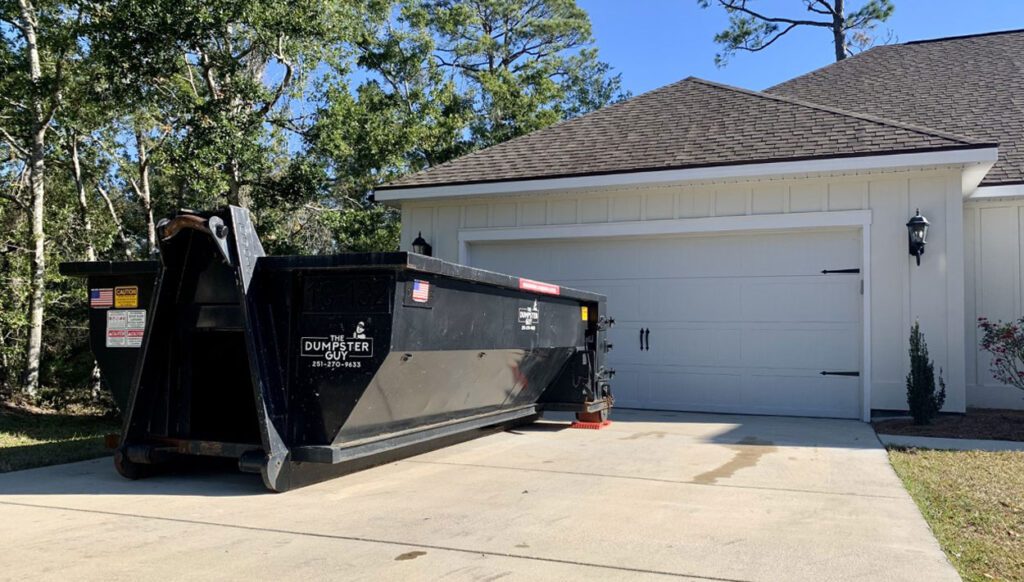
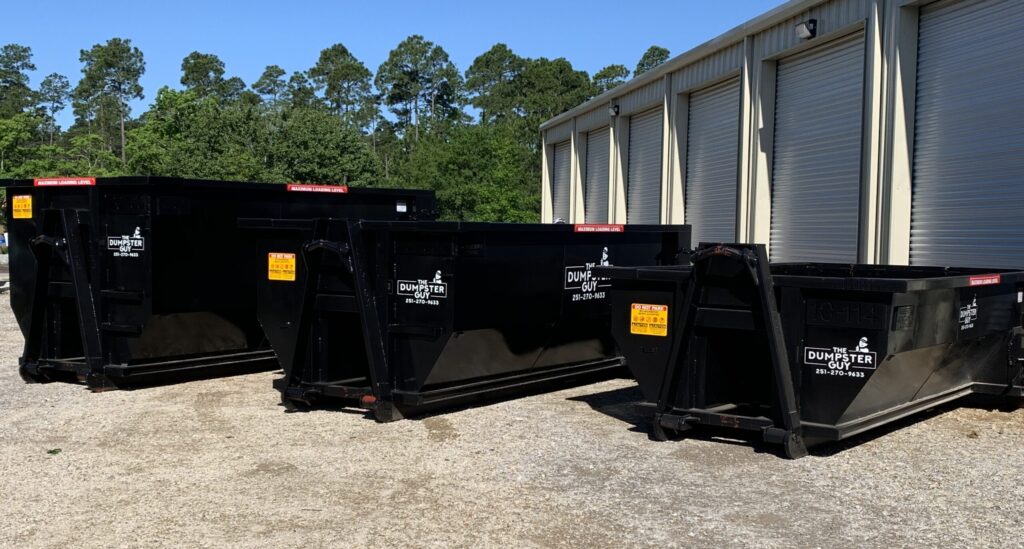
All three dumpster sizes share the same 8-foot width and 14-foot length. The difference is wall height, which is what makes them easy to load and easy to fit on a tight lot. Picking the right size for each phase is the single biggest lever on your dumpster budget, and our guide to choosing the right size goes deeper on volume.
Demolition and Tear-Out
Tear-out debris is dense. Plaster, tile, cabinets, and old framing fill weight faster than they fill space, so a 10-yard or 15-yard is often a smarter pick than a 20-yard that hits the weight limit before it is full.
Framing, New Construction, and Remodels
Lumber offcuts, packaging, drywall scraps, and general jobsite waste are bulky but lighter. This is where the 20-yard earns its keep, and it is the size most builders keep on site through the middle of a project.
Roofing
Shingles are one of the heaviest things a contractor throws away. A 10-yard handles most residential tear-offs, and for larger roofs or multiple layers it is usually better to plan two smaller dumps than to overload one big container.
Final Cleanup
Punch-list debris, trim waste, and landscaping leftovers usually fit in a 10-yard or 15-yard, and a smaller container is easier to place once driveways and sod are finished.
What Actually Moves a Construction Dumpster Budget
Two jobs with the same square footage can land at very different dumpster costs. These are the factors that decide it.
Weight Is the Big One on Job Sites
Every size carries a 5-ton allowance. Household debris almost never gets there, but construction debris can. Concrete, brick, block, tile, wet drywall, and roofing shingles are the usual culprits. Going over is uncommon when the container is sized right, but when it happens it adds an overage charge. If the job is mostly concrete or masonry, tell us up front so we can plan the right approach.
Number of Dumps
On a multi-phase job, the total is the per-dump rate multiplied by the number of hauls. Swapping a full container for an empty one keeps the site clean and keeps crews moving, and it is almost always cheaper than sending a company truck and trailer to the landfill.
Days on Site
Seven days are included with every dump. After that, each extra day is $10. On a slow-moving job, it is worth deciding whether to keep one container longer or schedule a swap at the end of each phase.
Placement and Permits
A container on private property, such as a driveway or a cleared lot, generally does not need a permit. If it has to sit on a public street or right-of-way, check with the city first. Keeping the drop spot clear and reachable avoids a wasted trip.
How to Budget Dumpsters Into a Bid
Contractors who build dumpster cost into the bid up front rarely get surprised by it later. A simple approach works for most jobs.
- Break the project into phases and estimate one container per phase
- Pick the size for each phase by debris type, not just volume
- Flag heavy debris like concrete, block, or shingles as its own line
- Add a cushion of extra rental days for weather and inspection delays
- Ask about contractor pricing if you run steady volume through the year
Ask Before You Guess
Describe the job and we will help size it. One right-sized container almost always costs less than an undersized one plus a second haul.
Concrete Washout and Demolition Are Separate Line Items
Not every piece of construction waste belongs in a roll-off. Concrete washout water from trucks, pumps, and tools needs a proper washout container to keep slurry off the ground and out of storm drains, and that is priced as its own service. Full structure removal and pool teardowns are handled through our demolition services, and old slabs come out through driveway concrete removal, with the haul-off built into the quote rather than billed per dump.
Keeping these separate in your bid makes the numbers cleaner and keeps you from paying roll-off rates for work that is cheaper handled another way.
Construction Jobs From Foley to Daphne
The Dumpster Guy is based in Foley and runs its own trucks across Baldwin County. That covers new construction in Foley and Loxley, remodels in Daphne, Fairhope, and Spanish Fort, and coastal builds in Gulf Shores and Orange Beach. Local crews mean predictable delivery windows, quick swaps, and rates you can put in a bid without calling a national broker. For placement and site logistics, see our guide to construction site dumpster rentals.
Key Takeaways
- Construction dumpsters are priced per dump at $375, $425, and $475 for 10, 15, and 20 yards.
- Each dump includes delivery, 7 days, pickup, disposal, and up to 5 tons.
- Extra days are $10 each and a fuel surcharge may apply.
- Heavy debris like concrete, block, and shingles is the main cause of overage charges, so size down and plan extra dumps.
- Budget one container per phase and ask about contractor pricing for steady volume.
- Concrete washout and demolition are separate services with their own quotes.
Frequently Asked Questions
How much does a construction dumpster cost in Baldwin County?
The Dumpster Guy prices construction dumpsters per dump at $375 for a 10-yard, $425 for a 15-yard, and $475 for a 20-yard. Each dump includes delivery, 7 days, pickup, disposal, and up to 5 tons.
What happens if my construction dumpster goes over the weight limit?
Each size includes a 5-ton allowance. Loads over that carry an overage charge. It is uncommon when the container is sized correctly, so tell us up front if the job is mostly concrete, masonry, or roofing.
How long can I keep a construction dumpster?
Seven days are included with every dump. Additional days are $10 each, so you can keep it longer on a slow job or schedule a swap at the end of each phase.
Do contractors get special dumpster pricing?
Contractor pricing is available on request for builders and trades who run steady volume through the year. Ask when you schedule your first container.
Can concrete go in a construction dumpster?
Concrete is heavy and fills the weight allowance quickly, so plan a smaller container or talk to us first. For washout water from trucks and tools, use a dedicated concrete washout container instead.